English





When Core Performance Problems Begin at the Stamping Stage
In many transformer and motor projects, stamping is often treated as a basic process step—cutting electrical steel into laminations according to drawings.
But in reality, this is where performance deviation begins.
You may not notice it immediately. Samples look acceptable. Dimensions are within tolerance.
Yet once production scales, issues start to appear:
- core loss gradually increases
- noise levels vary between batches
- temperature rise becomes inconsistent
- stacking becomes more difficult due to edge deformation
These problems often trace back to one source—the lamination stamping process.
A capable lamination stamping factory understands that stamping is not just shaping metal. It directly affects magnetic continuity, eddy current loss, and final core performance.
At Shumyi, we control stamping precision, tooling wear, and burr height at every stage to ensure that laminations maintain stable magnetic properties throughout production.
Key Technical Factors in Lamination Stamping
Stamping quality is determined by multiple interconnected variables. A professional lamination stamping factory must manage all of them simultaneously.
Burr Height and Edge Quality
Burr formation is one of the most critical factors.
Typical comparison:
- burr ≤0.02 mm → stable magnetic performance
- burr ≥0.05 mm → increased eddy current loss
Impact:
- higher burr → increased heat generation
- reduced efficiency under load
Tooling Precision and Wear Control
Stamping dies define lamination geometry.
Key parameters:
- dimensional tolerance: ±0.02 mm
- die wear monitoring cycle: controlled per batch
- edge smoothness consistency
Without proper control:
- dimensional drift occurs
- magnetic path becomes inconsistent
Material Behavior During Stamping
Electrical steel is sensitive to mechanical stress.
During stamping:
- internal stress increases
- magnetic domain structure is disturbed
Impact:
- core loss may increase by 5–8%
- permeability decreases
Some factories compensate with stress-relief processes, but prevention is more effective than correction.
Punching Speed and Process Stability
Stamping speed affects both productivity and quality.
Typical balance:
- high speed → higher output, risk of burr increase
- controlled speed → stable quality, lower defect rate
A reliable factory optimizes both to maintain consistency.
Performance Comparison: Standard vs Controlled Stamping
| Parameter | Standard Stamping | Controlled Stamping |
|---|---|---|
| Burr Height | 0.04–0.06 mm | ≤0.02 mm |
| Core Loss Impact | +5–8% increase | Stable |
| Dimensional Accuracy | ±0.05 mm | ±0.02 mm |
| Noise Level | Variable | Reduced by 10–20% |
| Production Yield | 85–92% | 95–97% |
| Tooling Stability | Inconsistent | Controlled |
For large-scale production, yield improvement alone significantly reduces cost.
How Stamping Parameters Adapt to Different Applications
A professional lamination stamping factory adjusts process settings based on end-use requirements, not just design drawings.
High-Efficiency Transformer Cores
Requirements:
- low core loss
- stable magnetic path
Stamping focus:
- ultra-low burr control
- high-precision dies
- stable material handling
Result:
- core loss reduction of 5–8%
- improved thermal performance
Motor Laminations for High-Speed Operation
Requirements:
- dynamic magnetic stability
- tight dimensional tolerance
Stamping focus:
- thinner material handling (≤0.27 mm)
- precise slot geometry
- improved edge quality
Result:
- reduced eddy current loss
- smoother motor operation
High-Volume OEM Production
Requirements:
- consistent batch quality
- high production efficiency
Stamping focus:
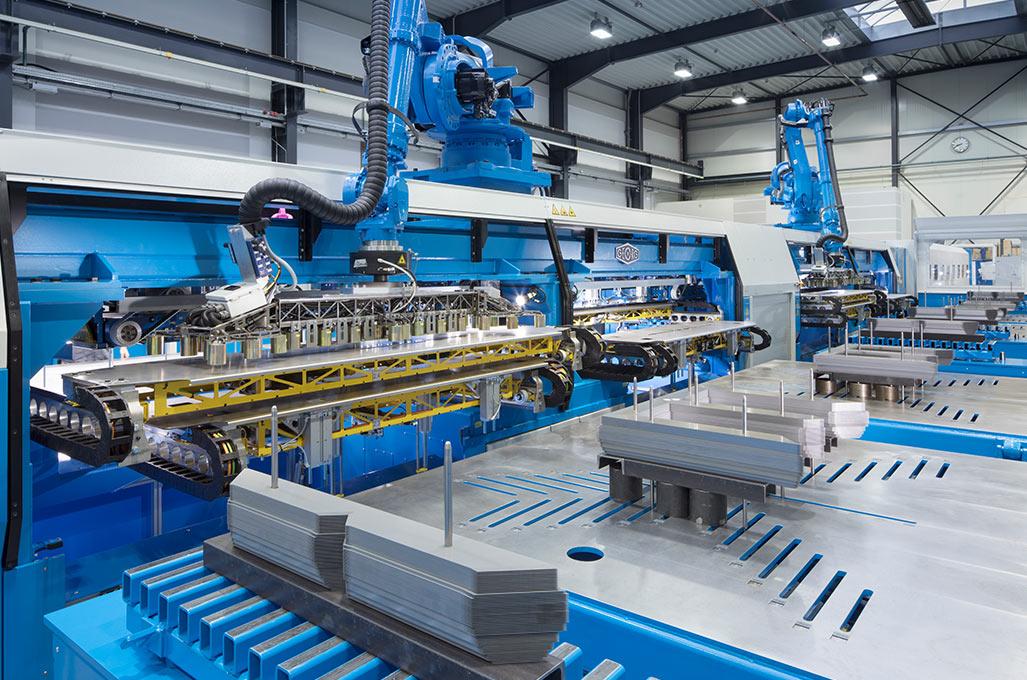
- automated feeding systems
- die life monitoring
- stable process control
Result:
- yield increase to 95%+
- reduced variation between batches
Safety, Quality Control, and Compliance
Stamping is a high-speed, high-precision process that requires strict quality and safety control.
Quality Control Process
Typical inspection includes:
- material verification before stamping
- burr measurement
- dimensional inspection
- sample-based core loss testing
Safety Considerations
Reliable production must ensure:
- controlled mechanical stress on material
- stable operation of stamping equipment
- consistent handling of thin electrical steel
Certifications
Professional manufacturers typically comply with:
- ISO 9001 – quality management
- RoHS – material compliance
- CE – applicable standards
Why Stamping Capability Determines Final Core Performance
Many buyers evaluate suppliers based on final product specifications. However, the stamping process determines whether those specifications can be consistently achieved.
A capable lamination stamping factory ensures:
- stable magnetic performance
- reduced variation across batches
- improved production yield
Even small improvements in stamping precision can lead to measurable gains in efficiency and reduced operational cost.
Working with a Lamination Stamping Factory That Controls Every Detail
At Shumyi, lamination stamping is treated as a critical control point in core production. From tooling design to burr management and process stability, we ensure that every lamination meets strict performance requirements.
If you want to explore how stamped laminations are applied in transformer and motor cores, you can review our product range here:
👉 https://www.shumyipx.com/products
For technical consultation, customization requirements, or quotation support, you can contact our team directly:
👉 https://www.shumyipx.com/contact-us
Working with a factory that understands both stamping mechanics and magnetic performance ensures stable output, reduced risk, and long-term reliability.