English





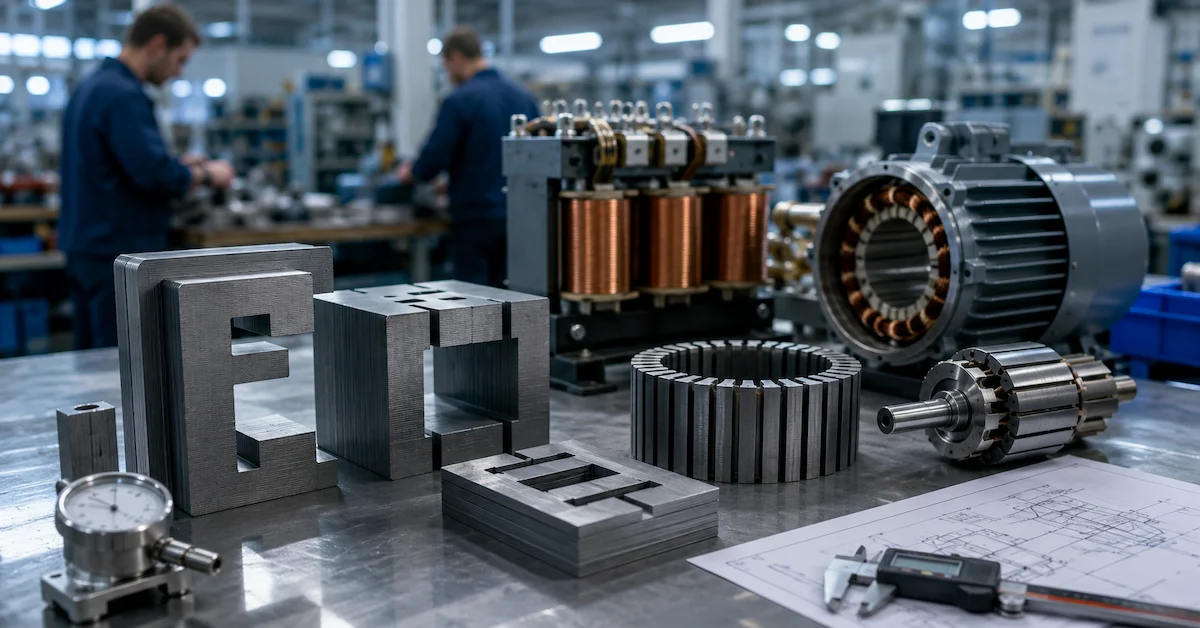
An OEM silicon steel core is a key magnetic component used in transformers, motors, generators, power supplies, sensors, and many electrical devices. Although it may look like a simple laminated metal part, its material grade, thickness, processing accuracy, stacking quality, and magnetic performance directly affect the final product’s efficiency, temperature rise, noise, assembly stability, and service life.
For B2B buyers, sourcing silicon steel cores is not only about finding a low price. A reliable supplier should understand how silicon steel behaves in electromagnetic applications, how lamination processing affects core loss, and how quality control reduces batch production risk.
Shumyipx supports silicon steel processing and custom magnetic core manufacturing for industrial customers that need drawing-based development, stable production, and quality inspection. Buyers can learn more about the company background through the Shumyipx About Us page.
What Is an OEM Silicon Steel Core?
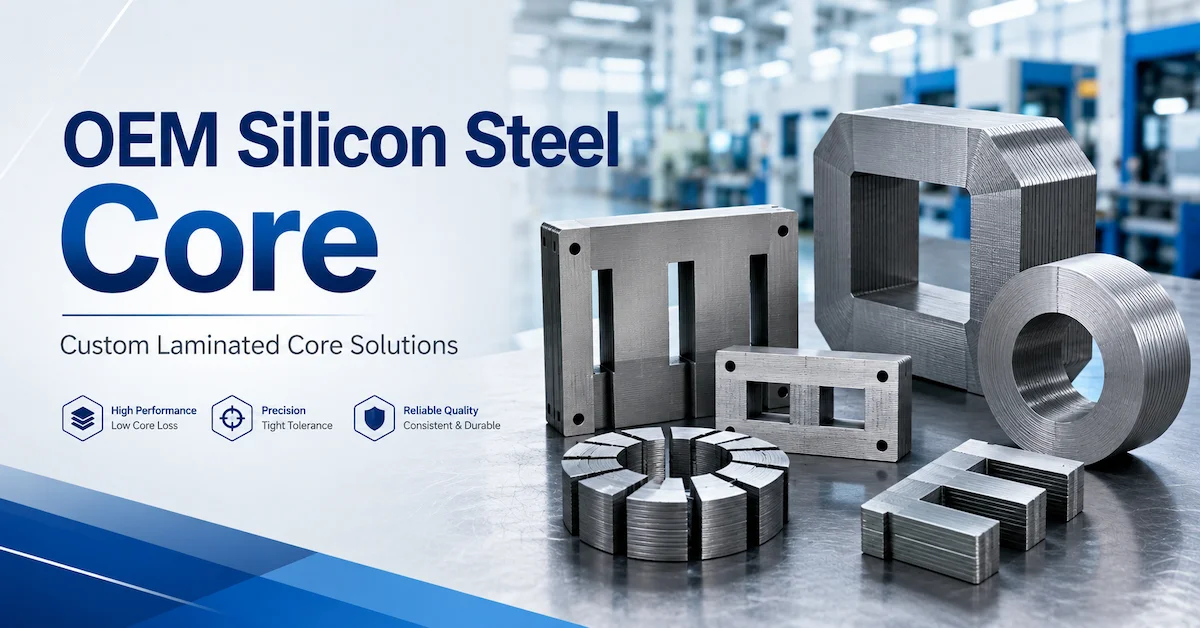
An OEM silicon steel core is a magnetic core made from silicon steel sheets according to a customer’s specific design, drawing, sample, or performance requirement. It is widely used in electrical equipment where magnetic flux needs to be guided efficiently.
Common OEM silicon steel core products include:
- Transformer cores
- Motor cores
- Generator cores
- EI laminations
- Rectangular laminated cores
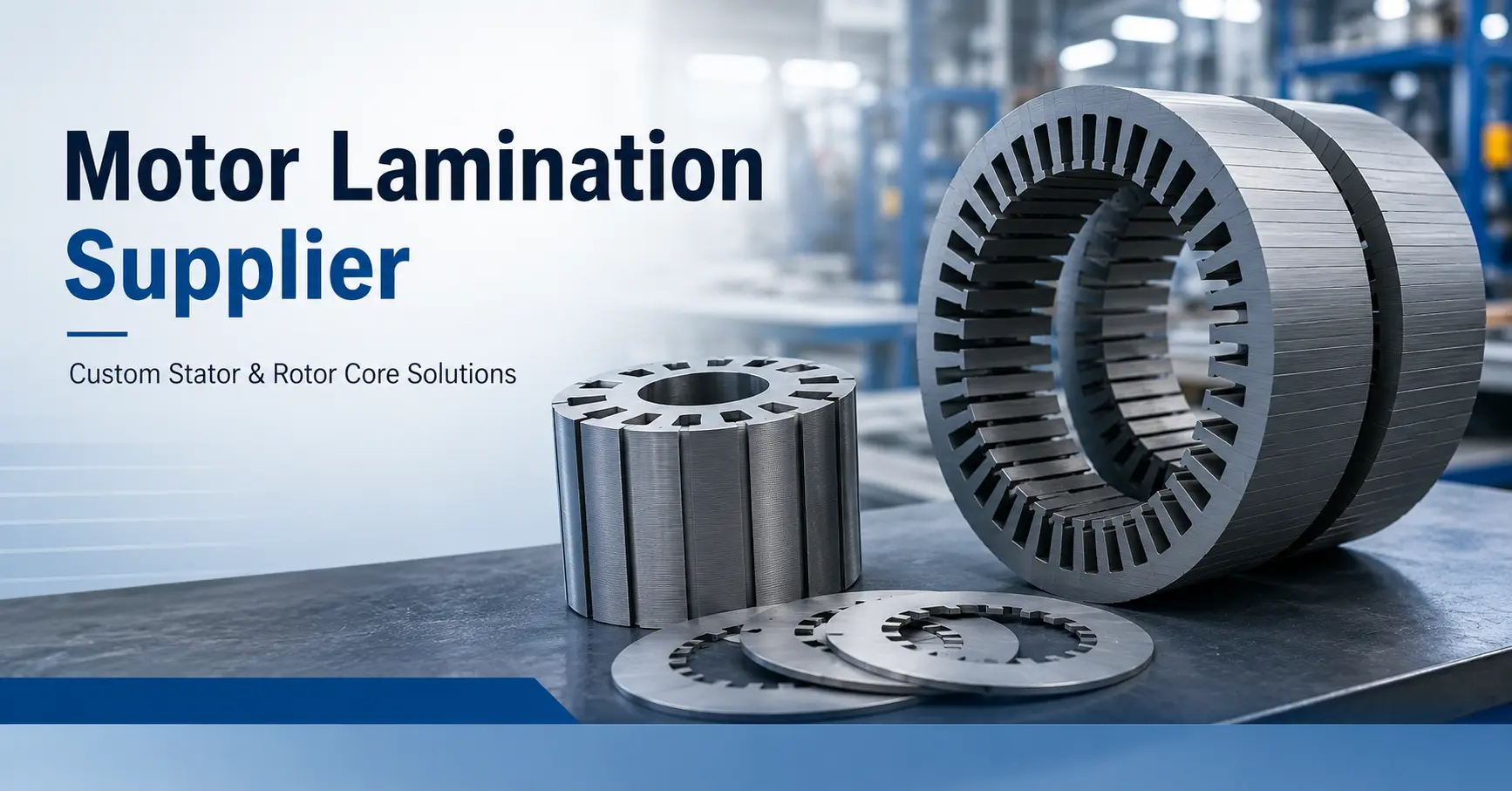
- Stator and rotor cores
- Custom silicon steel laminations
- Special-shaped magnetic core assemblies
Unlike standard stock parts, OEM silicon steel cores are customized around the buyer’s application. The supplier must consider material selection, structure, tolerance, lamination thickness, stacking height, insulation condition, and production volume.
Why Silicon Steel Core Quality Matters
Silicon steel is widely used because it offers good magnetic performance, stable processing characteristics, and a reasonable cost-performance balance. However, not all silicon steel cores perform the same.
1. Core Loss Affects Energy Efficiency
Core loss is one of the most important performance factors for transformers and motors. It is influenced by silicon steel grade, sheet thickness, insulation coating, magnetic flux density, frequency, and processing stress.
A well-processed OEM silicon steel core helps reduce energy waste and heat generation. This is especially important for power transformers, industrial motors, generators, and equipment that runs for long operating hours.
2. Lamination Thickness Affects Eddy Current Loss
Silicon steel cores are made from thin sheets instead of solid metal because laminated structures help reduce eddy current loss. Thinner sheets may improve efficiency in some applications, but they can also increase material cost and processing difficulty.
A good supplier should help buyers choose the right thickness based on application, performance target, and budget.
3. Stamping and Cutting Accuracy Affect Assembly
If the core shape, hole position, slot dimension, or stacking height is inaccurate, the buyer may face winding problems, assembly mismatch, vibration, or rejected parts. For OEM projects, dimensional stability is just as important as material selection.
4. Burr Control Affects Insulation and Reliability
Burrs from stamping or cutting may damage insulation layers, affect stacking quality, and increase electrical risk. A professional silicon steel core supplier should monitor edge quality and burr height during production.
Main Applications of OEM Silicon Steel Cores
Silicon steel cores are used in many industrial and electrical applications.
| Application | Core Requirement | Common Buyer Concern |
|---|---|---|
| Transformers | Low core loss, stable stacking, insulation quality | Efficiency, no-load loss, noise |
| Motors | Accurate stator/rotor lamination, good magnetic path | Assembly fit, vibration, heat |
| Generators | Stable magnetic performance, mechanical strength | Durability, output stability |
| Power supplies | Compact core design, reliable performance | Size, efficiency, temperature |
| Industrial equipment | Batch consistency, long-term reliability | Quality stability, lead time |
| New energy systems | Low loss and stable operation | Efficiency, thermal performance |
For each application, the best core design depends on working frequency, power level, temperature condition, size limitation, and performance target.
Shumyipx provides magnetic core and silicon steel related products for different industrial applications. Buyers can review product categories through the Shumyipx Products page.
How to Evaluate an OEM Silicon Steel Core Supplier
A qualified supplier should be evaluated from both engineering and purchasing perspectives.
| Evaluation Point | Why It Matters | What Buyers Should Check |
| Material capability | Determines magnetic performance | Silicon steel grade, thickness, coating |
| Processing capability | Affects shape and batch consistency | Shearing, stamping, stacking, lamination |
| Dimensional control | Affects assembly and winding | Tolerance, hole position, core height |
| Burr control | Reduces insulation and stacking risk | Edge quality, burr inspection |
| Core performance | Affects efficiency and heat | Core loss, permeability, test method |
| Quality inspection | Reduces shipment risk | Dimensional, material, electrical testing |
| OEM support | Supports custom projects | Drawing review, sample production, batch delivery |
This checklist helps purchasing teams avoid choosing a supplier only by unit price. A low-cost part can become expensive if it causes assembly delays, rework, testing failure, or unstable equipment performance.
Custom Processing Options for Silicon Steel Cores
An OEM silicon steel core project may require different processing methods depending on the product structure.
Shearing
Shearing is often used for silicon steel sheets and strip preparation. Stable shearing quality helps control sheet size and edge condition.
Stamping
Stamping is commonly used for EI laminations, motor stator and rotor laminations, and special-shaped silicon steel parts. Tooling precision is important for repeatability.
Stacking
For laminated cores, stacking accuracy affects core height, magnetic path consistency, and assembly stability.
Annealing
Some silicon steel core projects may require stress relief or heat treatment depending on the material and process. Proper annealing can help improve magnetic consistency.
Electrical Performance Testing
For transformer and motor buyers, electrical or magnetic performance testing helps verify whether the core meets the intended application requirements.
Technical Factors Buyers Should Understand
Core Loss
Core loss affects efficiency and heat rise. Buyers should confirm whether the supplier can help control material selection, lamination thickness, processing stress, and insulation condition.
Magnetic Permeability
Magnetic permeability affects how efficiently the core conducts magnetic flux. Stable permeability supports consistent transformer or motor performance.
Stacking Factor
Stacking factor refers to how effectively laminated sheets occupy the core volume. Poor stacking can reduce magnetic performance and affect final dimensions.
Insulation Coating
The insulation coating between silicon steel sheets helps reduce eddy current loss. Damaged coating may increase loss and reduce efficiency.
Dimensional Tolerance
For OEM parts, tolerance control is essential. Even small deviations can affect winding, installation, or assembly line efficiency.
Quality Control for OEM Silicon Steel Cores
Quality control should cover raw material, production process, finished product inspection, and packaging.
Important inspection points include:
- Raw material verification
- Silicon steel thickness inspection
- Surface and coating check
- Stamping dimension inspection
- Burr and edge inspection
- Flatness inspection
- Stacking height measurement
- Core appearance inspection
- Electrical performance testing
- Packaging protection before shipment
Shumyipx emphasizes quality assurance for magnetic core and silicon steel processing. Buyers can review related information through the Shumyipx Quality Assurance page.
For overseas buyers, this is especially important because quality problems may not appear until winding, assembly, or final testing. At that point, replacement cost and project delay can be much higher than the original component cost.
Cost and Risk Considerations
The cost of an OEM silicon steel core depends on many factors, including material grade, sheet thickness, core size, lamination structure, tooling requirement, tolerance level, order quantity, process complexity, inspection standard, and packaging method.
Buyers should pay attention to hidden risks behind low quotations:
- Higher core loss
- Poor dimensional consistency
- More burrs or edge defects
- Unstable stacking height
- Damaged insulation coating
- Assembly mismatch
- More rejected parts
- Project delays
- Higher total production cost
A reliable supplier helps buyers reduce total project risk by balancing material performance, processing stability, quality control, and cost.
How to Prepare an RFQ for OEM Silicon Steel Cores
To receive accurate technical feedback and quotation, buyers should prepare detailed information.
| RFQ Item | Recommended Information |
| Drawing file | CAD, DXF, DWG, PDF, STEP, or sample |
| Material | Silicon steel grade or performance requirement |
| Thickness | Required lamination thickness |
| Core type | Transformer core, motor core, EI lamination, custom shape |
| Dimensions | Outer size, inner size, height, hole position, tolerance |
| Application | Transformer, motor, generator, power equipment |
| Performance target | Core loss, permeability, frequency, temperature condition |
| Quantity | Sample quantity and batch production volume |
| Inspection needs | Dimensional, material, magnetic, or electrical testing |
| Packaging | Export packaging or special protection |
If the buyer is unsure about the exact material grade, it is better to provide the application and performance target first. The supplier can then suggest suitable silicon steel options.
FAQ
1. What is an OEM silicon steel core?
An OEM silicon steel core is a customized magnetic core made from silicon steel sheets according to customer drawings, samples, dimensions, or performance requirements.
2. Where are silicon steel cores used?
They are commonly used in transformers, motors, generators, power supplies, sensors, industrial equipment, and new energy systems.
3. Can Shumyipx customize silicon steel cores by drawing?
Yes. Customers can provide drawings, samples, material requirements, tolerance standards, and application information for evaluation.
4. What affects silicon steel core performance?
Material grade, sheet thickness, insulation coating, stamping quality, stacking accuracy, processing stress, and working frequency all affect performance.
5. Why are silicon steel cores laminated?
Laminated silicon steel sheets help reduce eddy current loss and improve electromagnetic efficiency compared with solid metal cores.
6. What affects the cost of an OEM silicon steel core?
Material grade, thickness, tooling, size, tolerance, processing complexity, quantity, inspection requirements, and packaging all affect cost.
7. Why is burr control important?
Burrs can affect insulation, stacking quality, assembly fit, and long-term electrical reliability.
8. Are OEM silicon steel cores suitable for small batch projects?
Yes. Many OEM projects start with samples or small batches before moving to mass production.
9. What information should buyers provide for quotation?
Buyers should provide drawings, material requirements, dimensions, tolerance, application, quantity, and inspection needs.
10. How can buyers reduce sourcing risk?
Buyers should choose a supplier with material knowledge, stable processing, inspection capability, sample support, and clear communication.
Conclusion
An OEM silicon steel core is critical to the efficiency, heat control, noise level, assembly stability, and long-term reliability of transformers, motors, generators, and power equipment. Buyers should evaluate more than price. Material selection, lamination thickness, stamping accuracy, burr control, stacking quality, inspection capability, and OEM communication all affect the final result.
Shumyipx supports custom silicon steel core manufacturing, magnetic core processing, and OEM magnetic component projects for industrial buyers. If your project requires transformer cores, motor cores, EI laminations, or custom silicon steel laminated cores, send your drawings and technical requirements to Shumyipx for evaluation.