 English





A custom motor core is a key component in electric motors, generators, pumps, fans, compressors, electric tools, automotive systems, and industrial equipment. It provides the magnetic path that allows electrical energy to be converted into mechanical motion. For motor manufacturers and OEM buyers, the quality of the motor core directly affects efficiency, torque output, heat rise, vibration, noise, and long-term reliability.
A motor core may look like a stacked metal part, but its performance depends on several technical factors: silicon steel material, lamination thickness, stamping accuracy, burr control, stacking consistency, insulation coating, and dimensional tolerance. If any of these factors are unstable, the final motor may suffer from higher energy loss, poor assembly fit, unstable operation, or reduced service life.
Shumyipx supports silicon steel processing and custom magnetic core manufacturing for industrial customers that need drawing-based customization, stable production, and quality inspection. Buyers can learn more about the company background through the Shumyipx About Us page.
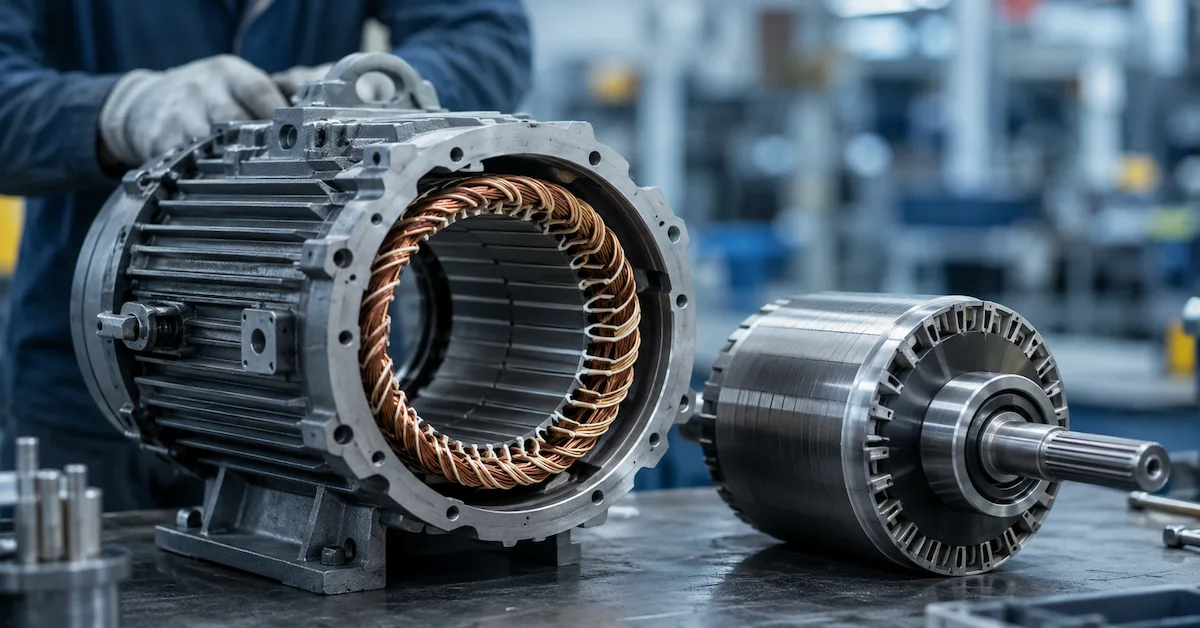
What Is a Custom Motor Core?
A custom motor core is a magnetic core manufactured according to the customer’s motor design, drawing, sample, material requirement, tolerance, and performance target. It is usually made from thin electrical steel or silicon steel laminations that are stamped, cut, stacked, or assembled into stator and rotor structures.
Common custom motor core products include:
- Stator cores
- Rotor cores
- Motor laminations
- Silicon steel motor cores
- Segmented motor cores
- Custom laminated cores
- Generator cores
- Small motor core assemblies
- Industrial motor core components
Unlike standard catalog parts, custom motor cores are developed around the buyer’s actual motor structure. The supplier must understand not only the shape, but also magnetic performance, mechanical fit, batch consistency, and assembly requirements.
Why Motor Core Quality Matters
Motor core quality is closely related to final motor performance. Poor material or processing can cause higher loss, more heat, vibration, noise, and lower production yield.
1. Core Loss Affects Motor Efficiency
Core loss is one of the most important factors in motor design. It is affected by silicon steel grade, lamination thickness, insulation coating, magnetic flux density, frequency, and processing stress. Lower core loss helps improve energy efficiency and reduce heat generation.
2. Stator and Rotor Accuracy Affects Assembly
The stator and rotor must match the motor housing, shaft, winding, and air gap design. If slot dimensions, inner diameter, outer diameter, or stacking height are inconsistent, the motor assembly process may face alignment problems, vibration, or rejected parts.
3. Burr Control Affects Insulation and Reliability
Stamping burrs can damage insulation layers and affect stacking quality. Excessive burrs may increase the risk of short circuits between laminations and reduce long-term reliability. A professional supplier should control burr height and edge quality during production.
4. Stacking Consistency Affects Noise and Vibration
For laminated motor cores, stacking flatness and alignment affect the magnetic path and mechanical stability. Poor stacking may create gaps, uneven pressure, noise, vibration, and unstable performance.
Main Materials Used for Custom Motor Cores
Most custom motor cores are made from electrical steel, especially silicon steel. The material should be selected according to motor type, efficiency target, operating frequency, temperature condition, and cost requirement.
| Material Type | Main Features | Common Applications |
|---|---|---|
| Silicon steel | Stable magnetic performance, mature processing, good cost balance | Industrial motors, generators, pumps, fans |
| Thin-gauge electrical steel | Lower eddy current loss in some applications | High-efficiency motors, compact motors |
| Custom laminated steel | Designed by drawing and motor structure | OEM stator and rotor projects |
| Special magnetic material | Selected for specific performance targets | Precision motors, special equipment |
For many motor projects, silicon steel offers a practical balance between performance, manufacturability, and cost. However, the correct grade and thickness should be chosen based on the motor’s working conditions.
Shumyipx provides magnetic core and silicon steel related products for different industrial applications. Buyers can review product categories through the Shumyipx Products page.
Common Types of Custom Motor Cores
A custom motor core project may include different components depending on the motor design.
| Product Type | Function | Key Requirement |
| Stator core | Stationary magnetic core | Slot accuracy, stacking height, winding fit |
| Rotor core | Rotating magnetic core | Balance, inner diameter accuracy, strength |
| Motor lamination | Thin steel sheet used for core stacking | Burr control, shape consistency |
| Segmented core | Used in special or large motor designs | Assembly precision, segment consistency |
| Generator core | Magnetic core for power generation | Stability, low loss, mechanical reliability |
For OEM buyers, the best approach is to provide drawings, material requirements, tolerance standards, application details, and estimated production volume during the RFQ stage.
What Buyers Should Check Before Choosing a Supplier
Choosing a custom motor core supplier should not depend only on price. Buyers should evaluate technical capability, production control, inspection process, and communication efficiency.
| Evaluation Point | Why It Matters | What Buyers Should Check |
| Material capability | Determines magnetic performance | Silicon steel grade, thickness, coating |
| Stamping capability | Affects shape accuracy | Tooling precision, repeatability, slot accuracy |
| Dimensional control | Affects assembly fit | ID, OD, slot, hole position, stacking height |
| Burr control | Protects insulation and stacking quality | Edge quality, burr inspection, process control |
| Stacking quality | Affects noise and vibration | Flatness, alignment, stacking factor |
| Quality inspection | Reduces sourcing risk | Dimensional, material, and electrical testing |
| OEM support | Supports custom projects | Drawing review, sample development, batch production |
This checklist helps buyers avoid suppliers that can produce simple parts but cannot control long-term batch consistency.
Custom Motor Core Manufacturing Process
A clear production process helps reduce communication errors and project delays.
Step 1: Drawing or Sample Submission
The buyer provides CAD files, PDF drawings, samples, material requirements, tolerance standards, and motor application details.
Step 2: Material and Process Review
The supplier evaluates silicon steel grade, lamination thickness, stamping feasibility, tolerance, and production method.
Step 3: Tooling and Sample Planning
For custom stator or rotor laminations, tooling may be required. The supplier should explain tooling cost, sample lead time, and possible technical risks.
Step 4: Sample Production
Samples are produced for dimensional inspection, assembly testing, and motor performance verification.
Step 5: Batch Production
After sample approval, the project enters controlled batch production. Stable process control is important for consistent stator and rotor quality.
Step 6: Inspection and Shipment
Finished motor cores are inspected, packed, and shipped according to customer requirements.
Technical Factors That Affect Motor Core Performance
Lamination Thickness
Thinner laminations can help reduce eddy current loss in some applications, but they may increase cost and processing complexity. Buyers should balance efficiency target and production budget.
Magnetic Permeability
Magnetic permeability affects how efficiently the core conducts magnetic flux. Stable permeability supports consistent motor performance.
Stacking Factor
Stacking factor affects how effectively the laminated sheets occupy the core volume. Poor stacking may reduce magnetic performance and affect final dimensions.
Insulation Coating
Insulation coating between laminations helps reduce eddy current loss. Damaged coating or rough edges may reduce motor efficiency.
Dimensional Tolerance
Tolerance control is essential for stator slots, rotor inner diameter, outer diameter, and stacking height. Small deviations may create assembly or performance problems.
Quality Control for Custom Motor Cores
Quality control should cover the full production process, from incoming material inspection to final shipment.
Important inspection points include:
- Raw material verification
- Silicon steel thickness inspection
- Surface and coating check
- Stamping dimension inspection
- Burr and edge inspection
- Slot accuracy inspection
- Flatness inspection
- Stacking height measurement
- Appearance inspection
- Packaging protection before shipment
Shumyipx emphasizes quality assurance for magnetic core and silicon steel processing. Buyers can review related information through the Shumyipx Quality Assurance page.
For overseas buyers, quality control is especially important because problems may not appear until winding, assembly, or motor testing. At that stage, replacement and rework costs can be much higher than the original component cost.
Application Areas of Custom Motor Cores
A custom motor core can be used in many industries.
Common applications include:
- Industrial motors
- Generators
- Pumps
- Compressors
- Fans and blowers
- Electric tools
- Home appliances
- Automotive components
- EV-related systems
- Industrial automation
- Power transmission equipment
- New energy equipment
Different applications have different priorities. Industrial motors may focus on durability and batch consistency. High-efficiency motors may focus on low loss. Small motors may require tighter dimensions and stable mass production.
Cost and Risk Considerations
The cost of a custom motor core depends on material grade, lamination thickness, part size, slot complexity, tooling requirement, tolerance level, order quantity, inspection standard, and packaging method.
Buyers should be careful with very low quotations. Low-cost motor cores may create hidden risks such as:
- Higher motor loss
- Poor assembly fit
- Excessive burrs
- Unstable stacking height
- More vibration or noise
- Higher rejection rate
- Longer testing time
- Project delays
- Higher total production cost
A reliable supplier helps buyers reduce total project risk by providing stable material control, accurate processing, and quality inspection.
How to Prepare an RFQ for Custom Motor Cores
To receive accurate feedback and quotation, buyers should prepare detailed information.
| RFQ Item | Recommended Information |
| Drawing file | CAD, DXF, DWG, PDF, STEP, or sample |
| Core type | Stator core, rotor core, motor lamination, generator core |
| Material | Silicon steel grade or performance requirement |
| Thickness | Required lamination thickness |
| Dimensions | ID, OD, slot shape, hole position, height, tolerance |
| Application | Motor type, power level, industry use |
| Quantity | Sample quantity and batch production volume |
| Inspection needs | Dimensional, material, or electrical testing |
| Packaging | Export packaging or special protection |
If the buyer is unsure about material selection, it is better to provide the motor application and performance target first. The supplier can then suggest a suitable silicon steel option.
FAQ
1. What is a custom motor core?
A custom motor core is a magnetic core made according to customer drawings, samples, material requirements, dimensions, and motor application needs.
2. What materials are used for motor cores?
Motor cores are commonly made from silicon steel or electrical steel laminations because they offer stable magnetic performance and good processing capability.
3. What is the difference between a stator core and a rotor core?
The stator core is the stationary part of the motor, while the rotor core is the rotating part. Both require accurate lamination processing.
4. Can Shumyipx customize motor cores by drawing?
Yes. Customers can provide drawings, samples, material requirements, tolerance standards, and application information for evaluation.
5. Why are motor cores laminated?
Laminated structures help reduce eddy current loss and improve motor efficiency compared with solid metal cores.
6. What affects the cost of a custom motor core?
Material grade, thickness, tooling, size, slot complexity, tolerance, quantity, and inspection requirements all affect cost.
7. Why is burr control important?
Burrs can affect insulation, stacking quality, assembly fit, and long-term motor reliability.
8. Are custom motor cores suitable for OEM projects?
Yes. Custom motor cores are suitable for OEM motor manufacturers that need specific stator, rotor, or lamination designs.
9. What information should buyers provide for quotation?
Buyers should provide drawings, material requirements, dimensions, tolerance, application, quantity, and inspection needs.
10. How can buyers reduce sourcing risk?
Buyers should choose a supplier with material knowledge, stamping capability, inspection process, sample support, and stable batch production experience.
Conclusion
A custom motor core plays a critical role in motor efficiency, torque stability, heat control, noise reduction, and long-term reliability. Buyers should evaluate more than price when choosing a supplier. Material selection, lamination thickness, stamping precision, burr control, stacking quality, inspection capability, and OEM communication all affect the final motor performance.
Shumyipx supports custom motor core manufacturing, silicon steel processing, and OEM magnetic component projects for industrial buyers. If your project requires stator cores, rotor cores, motor laminations, generator cores, or custom silicon steel core assemblies, send your drawings and technical requirements to Shumyipx for evaluation.