English





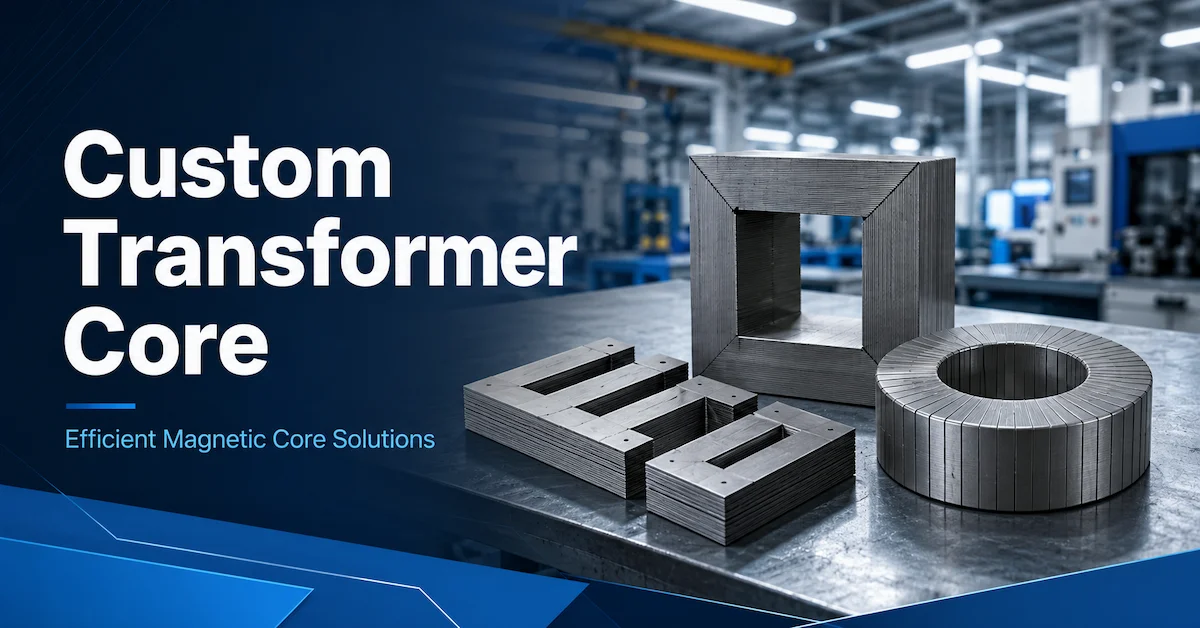
Choosing a transformer core OEM supplier is a critical decision for transformer manufacturers and power equipment buyers. A transformer core is not just a metal component. It directly affects energy transfer efficiency, no-load loss, temperature rise, operating noise, size, and long-term reliability.
For OEM projects, buyers often need custom core dimensions, specific material grades, special structures, stable batch quality, and engineering support. A standard catalog core may not fit the transformer’s electrical design, winding structure, installation space, or loss target. This is why many buyers look for an OEM supplier that can support custom transformer core development from drawing review to batch production.
Shumyipx supports magnetic core manufacturing and silicon steel processing for industrial customers that need custom transformer cores, silicon steel laminations, amorphous cores, nanocrystalline cores, and other OEM magnetic components. Buyers can learn more about the company background through the Shumyipx About Us page.
What Does a Transformer Core OEM Supplier Do?
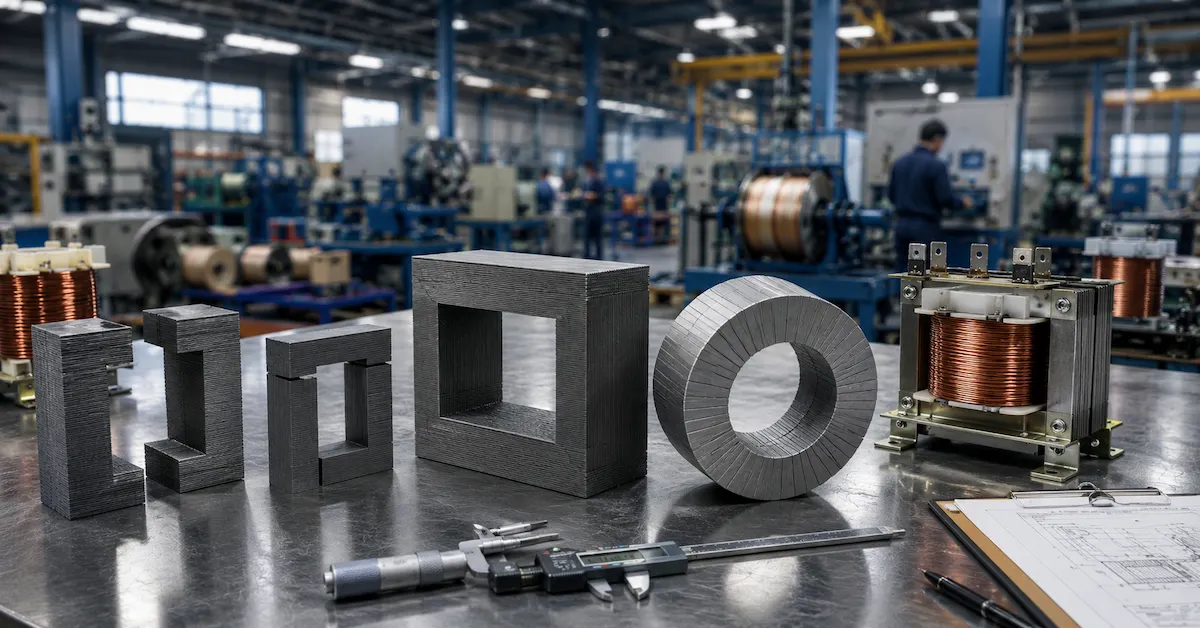
A transformer core OEM supplier manufactures transformer cores according to the buyer’s drawings, samples, material requirements, performance targets, and production needs. The supplier may support material selection, process planning, sample production, quality inspection, and batch delivery.
Common OEM transformer core products include:
- Silicon steel transformer cores
- Amorphous transformer cores
- Nanocrystalline transformer cores
- EI laminated cores
- C cores
- Toroidal cores
- Rectangular laminated cores
- Wound cores
- Custom transformer laminations
- Special-shaped magnetic cores
Unlike a simple trading supplier, a capable OEM supplier should understand both manufacturing and electromagnetic performance. The final goal is not only to make the correct shape, but also to help the customer achieve stable transformer performance.
Why Transformer Core Quality Matters
Transformer performance depends heavily on the core. If the core material or manufacturing process is unstable, the final transformer may have higher loss, more heat, louder noise, or lower reliability.
1. Core Loss Affects Efficiency
Core loss is one of the most important performance indicators in transformer core design. It is affected by material grade, lamination thickness, magnetic flux density, frequency, insulation coating, processing stress, and stacking quality.
A reliable transformer core OEM supplier should help buyers control material and process factors that affect no-load loss and energy efficiency.
2. Material Selection Affects Application Matching
Different transformer applications require different core materials. Silicon steel is widely used because it offers stable magnetic performance and mature processing. Amorphous cores are often selected for low-loss energy-saving transformers. Nanocrystalline cores are suitable for compact, high-frequency, or high-permeability applications.
Choosing the wrong material may increase cost, reduce efficiency, or create performance instability.
3. Dimensional Accuracy Affects Winding and Assembly
Transformer cores must match winding windows, bobbins, clamps, frames, and installation space. If the dimensions are inaccurate, the buyer may face winding difficulty, assembly mismatch, insulation problems, or testing delays.
4. Process Control Affects Batch Consistency
Even if the first sample is acceptable, unstable batch production can create problems later. Buyers should check whether the supplier can control stacking height, flatness, burrs, surface condition, and inspection standards across repeat orders.
Main Materials for Transformer Core OEM Projects
A transformer core OEM supplier should help buyers choose materials based on application, frequency, power level, loss target, and budget.
| Material Type | Main Features | Common Applications |
|---|---|---|
| Silicon steel | Stable performance, mature processing, good cost balance | Power transformers, EI cores, industrial transformers |
| Amorphous alloy | Very low core loss, energy-saving performance | Distribution transformers, low-loss power equipment |
| Nanocrystalline alloy | High permeability, low loss, good high-frequency performance | Current transformers, filters, compact power systems |
| Permalloy / Mumetal | High permeability and magnetic sensitivity | Precision transformers, measuring devices |
| Custom laminated core | Flexible dimensions and structures | OEM transformer projects |
For most industrial buyers, the best material is the one that matches the transformer’s working condition, not simply the highest-performance or lowest-cost option.
Shumyipx provides magnetic core and related product categories for different industrial applications. Buyers can review product information through the Shumyipx Products page.
Common Transformer Core Types
Transformer core structure affects magnetic path, winding design, noise, cost, and assembly efficiency.
| Core Type | Main Advantages | Typical Use |
| EI lamination | Mature, economical, easy to assemble | Small and medium power transformers |
| C core | Compact design and efficient magnetic path | Industrial power and control transformers |
| Toroidal core | Low leakage flux, compact size, low noise | Power, audio, medical and precision devices |
| Rectangular laminated core | Easy to customize by drawing | OEM transformer projects |
| Wound core | Continuous magnetic path, good efficiency | Power and distribution transformers |
| Nanocrystalline core | High permeability and low loss | CT, sensors, filters, high-frequency applications |
A qualified OEM supplier should not only quote by size. It should also evaluate whether the core structure matches the electrical design and production method.
What Buyers Should Check Before Choosing a Supplier
A professional transformer core OEM supplier should be evaluated from technical, quality, and supply-chain perspectives.
| Evaluation Point | Why It Matters | What Buyers Should Check |
| Material capability | Determines magnetic performance | Silicon steel, amorphous, nanocrystalline options |
| Custom processing | Supports OEM designs | Drawing review, sample development, custom production |
| Dimensional control | Affects winding and assembly | Tolerance, core height, window size, flatness |
| Core loss control | Affects energy efficiency | Material grade, thickness, insulation, process stress |
| Process capability | Affects consistency | Cutting, stamping, stacking, winding, annealing |
| Quality inspection | Reduces sourcing risk | Dimensional, material, and electrical testing |
| Communication | Improves project efficiency | Fast feedback, clear RFQ review, lead time planning |
This checklist helps buyers avoid choosing suppliers only by unit price. A low-cost transformer core can become expensive if it causes winding failure, high loss, rejected products, or shipment delays.
OEM Transformer Core Manufacturing Process
A clear process helps reduce misunderstanding between engineering, purchasing, and production teams.
Step 1: Drawing or Sample Submission
The buyer provides CAD drawings, PDF specifications, samples, material requirements, electrical parameters, and application details.
Step 2: Material and Application Review
The supplier reviews the transformer type, power level, working frequency, loss target, and installation structure to recommend suitable materials.
Step 3: Process Planning
The supplier confirms whether the core requires shearing, stamping, stacking, winding, annealing, insulation treatment, or electrical performance testing.
Step 4: Quotation and Technical Feedback
The supplier provides quotation, sample lead time, tooling requirements, batch production schedule, and possible technical suggestions.
Step 5: Sample Production
Samples are produced for dimensional inspection, winding trial, assembly test, and electrical performance verification.
Step 6: Batch Production
After sample approval, the order enters controlled batch manufacturing with process inspection and production tracking.
Step 7: Final Inspection and Shipment
Finished cores are checked, packed, and shipped according to customer requirements.
Technical Factors That Affect Transformer Core Performance
Core Loss
Core loss affects energy efficiency and heat generation. It is influenced by material grade, lamination thickness, frequency, flux density, insulation coating, and processing stress.
Magnetic Permeability
Magnetic permeability affects how efficiently the core conducts magnetic flux. Stable permeability supports consistent transformer performance.
No-Load Loss
No-load loss is especially important for transformers that operate continuously. Lower no-load loss helps reduce long-term energy cost.
Stacking Accuracy
For laminated transformer cores, stacking accuracy affects magnetic path consistency, core height, noise, and assembly stability.
Burr Control
For stamped or cut laminations, burr control is important because excessive burrs may damage insulation layers and affect stacking quality.
Annealing
Some transformer cores require annealing to relieve processing stress and restore magnetic properties. Stable annealing helps improve magnetic consistency.
Quality Control for Transformer Core OEM Supply
Quality control is essential because transformer core defects may not be discovered until winding, assembly, or electrical testing. At that stage, rework cost can be much higher than the component cost.
Important quality checkpoints include:
- Raw material verification
- Lamination thickness inspection
- Surface and coating check
- Dimensional measurement
- Burr and edge inspection
- Flatness inspection
- Stacking height inspection
- Core loss or electrical performance testing
- Appearance inspection
- Export packaging inspection
Shumyipx emphasizes quality assurance for magnetic core and silicon steel processing. Buyers can review related details through the Shumyipx Quality Assurance page.
Application Areas of OEM Transformer Cores
OEM transformer cores are used in many power and industrial systems.
Common applications include:
- Power transformers
- Distribution transformers
- Control transformers
- Current transformers
- Instrument transformers
- High-frequency transformers
- UPS systems
- EV charging equipment
- Solar inverters
- Wind power equipment
- Industrial power supplies
- Smart grid equipment
- Medical devices
- Automotive electronics
- Consumer electronics
Different applications require different priorities. A distribution transformer may focus on low no-load loss. A high-frequency transformer may need nanocrystalline material. A control transformer may focus on stable dimensions and batch consistency.
Cost and Risk Considerations
The cost of a transformer core depends on material type, core size, lamination thickness, structure, tooling, tolerance, order quantity, inspection standard, and packaging method.
Buyers should be careful with unusually low quotations because they may indicate hidden risks:
- Higher core loss
- Poor stacking consistency
- Damaged insulation coating
- Winding mismatch
- More noise or heat
- Higher rejection rate
- Longer testing time
- Delayed delivery
- Extra rework cost
A reliable transformer core OEM supplier helps buyers reduce total project cost by improving material consistency, manufacturing stability, and inspection reliability.
How to Prepare an RFQ for Transformer Core OEM Supply
To receive an accurate quotation, buyers should prepare complete project information.
| RFQ Item | Recommended Information |
| Drawing file | CAD, DXF, DWG, PDF, STEP, or sample |
| Core material | Silicon steel, amorphous, nanocrystalline, or unknown |
| Core type | EI, C core, toroidal, wound core, rectangular, custom shape |
| Dimensions | Outer size, inner size, window size, height, thickness |
| Application | Transformer type, power level, working frequency |
| Performance target | Core loss, no-load loss, permeability, temperature condition |
| Quantity | Sample quantity and batch production volume |
| Inspection needs | Dimensional, material, magnetic, or electrical testing |
| Packaging | Export packaging or special protection |
If the buyer is unsure about material or structure, it is better to share the application details first. A capable supplier can then provide technical suggestions before quotation.
FAQ
1. What is a transformer core OEM supplier?
A transformer core OEM supplier manufactures transformer cores according to customer drawings, samples, materials, performance targets, and batch production requirements.
2. What transformer core materials are commonly used?
Common materials include silicon steel, amorphous alloy, nanocrystalline alloy, permalloy, and other soft magnetic materials.
3. Can Shumyipx customize transformer cores by drawing?
Yes. Customers can provide drawings, samples, material requirements, tolerance standards, application information, and performance targets for evaluation.
4. What affects transformer core efficiency?
Material grade, core loss, lamination thickness, insulation coating, stacking quality, frequency, and processing stress all affect efficiency.
5. What is the difference between silicon steel and amorphous cores?
Silicon steel is mature and cost-effective. Amorphous cores usually provide lower core loss for energy-saving transformer applications.
6. When should buyers choose nanocrystalline cores?
Nanocrystalline cores are suitable for high-frequency, compact, low-loss, or high-permeability applications such as current transformers, filters, and sensors.
7. What affects transformer core cost?
Material, size, structure, thickness, tooling, tolerance, process complexity, order quantity, and inspection requirements all affect cost.
8. Why is quality control important for OEM transformer cores?
Quality control reduces the risk of winding problems, performance deviation, rejected products, delivery delays, and rework cost.
9. Are transformer cores suitable for OEM custom projects?
Yes. Transformer cores are commonly customized for OEM projects that require specific material, structure, dimensions, and performance targets.
10. How should I start a transformer core OEM project?
Prepare drawings, core type, material requirements, dimensions, application details, performance targets, quantity, and testing requirements, then request technical evaluation.
Conclusion
Choosing the right transformer core OEM supplier is essential for transformer efficiency, no-load loss control, temperature stability, noise reduction, assembly reliability, and long-term performance. Buyers should evaluate more than price. Material selection, core structure, process capability, dimensional control, quality inspection, communication speed, and OEM support all affect the final project result.
Shumyipx supports custom transformer core manufacturing, silicon steel processing, and OEM magnetic component projects for industrial buyers. If your project requires silicon steel transformer cores, amorphous cores, nanocrystalline cores, EI laminations, C cores, toroidal cores, or custom transformer laminations, send your drawings and technical requirements to Shumyipx for evaluation.